
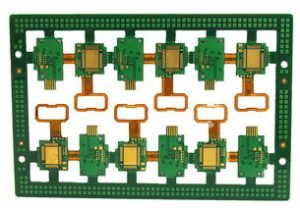
Innovations in Rigid-Flex PCB Technology for Ultra-Low-Latency Smart Home Networks
In today’s rapidly evolving technological landscape, the demand for seamless connectivity and ultra-low-latency performance in smart home networks is higher than ever.
As smart homes become increasingly sophisticated, with a multitude of interconnected devices and systems,
the need for advanced printed circuit board (PCB) technologies that can support these complex networks is paramount. One such innovation that is revolutionizing the smart home industry is Rigid-Flex PCB technology.
By combining the flexibility of flexible PCBs with the rigidity of traditional rigid PCBs, Rigid-Flex PCBs offer unparalleled performance, durability, and space-saving benefits that are ideal for ultra-low-latency smart home networks.
The Advantages of Rigid-Flex PCBs in Smart Home Networks
Rigid-Flex PCBs provide a myriad of advantages that make them an ideal choice for modern smart home networks.
One of the key benefits of Rigid-Flex PCB technology is its ability to reduce the overall size and weight of electronic devices, making it especially well-suited for compact smart home devices.
The flexibility of Rigid-Flex PCBs allows them to be folded or bent to fit into tight spaces, which is crucial for smart home devices with limited space constraints.
This compact design not only saves space but also enhances the overall aesthetics of smart home products.
Another significant advantage of Rigid-Flex PCBs is their improved reliability and durability.
The rigid sections of the board provide structural support and protection for sensitive components, while the flexible sections allow for dynamic movement without compromising the integrity of the connections.
This robust construction reduces the risk of damage from vibrations, impacts, or thermal expansion, ensuring the long-term performance and longevity of smart home devices.
Ultra-Low-Latency Performance with Rigid-Flex PCBs
In the context of smart home networks, latency is a critical factor that can significantly impact the user experience.
Ultra-low-latency networks are essential for real-time communication between smart devices, ensuring seamless operation and responsiveness.
Rigid-Flex PCBs play a crucial role in achieving ultra-low-latency performance in smart home networks by providing high-speed signal transmission and reliable connectivity.
The advanced design of Rigid-Flex PCBs minimizes signal interference and impedance mismatch, resulting in consistent signal integrity and reduced latency.
This is particularly important for smart home applications that require instantaneous data transmission, such as smart lighting systems, home security cameras, and voice-controlled assistants.
By utilizing Rigid-Flex PCB technology, smart home devices can deliver ultra-low-latency performance, enabling users to enjoy a seamless and responsive smart home experience.
Future Trends and Innovations in Rigid-Flex PCB Technology
As the demand for ultra-low-latency smart home networks continues to grow, the future of Rigid-Flex PCB technology looks promising.
Innovations in materials, manufacturing processes, and design techniques are driving advancements in Rigid-Flex PCB technology, making it more versatile, efficient, and cost-effective for smart home applications.
One of the emerging trends in Rigid-Flex PCB technology is the integration of advanced materials such as polyimide and liquid crystal polymers, which offer enhanced thermal stability, flexibility, and signal integrity.
These materials enable the development of thinner and lighter Rigid-Flex PCBs with improved performance characteristics, making them ideal for next-generation smart home devices.
Furthermore, advancements in additive manufacturing and 3D printing technologies are revolutionizing the production of Rigid-Flex PCBs, allowing for rapid prototyping, customization, and scalability.
This innovative approach to PCB manufacturing accelerates the development cycle and reduces time-to-market for cutting-edge smart home solutions.
Conclusion
In conclusion, Rigid-Flex PCB technology is a game-changer for ultra-low-latency smart home networks, offering unparalleled performance, reliability, and efficiency.
By leveraging the benefits of Rigid-Flex PCBs, smart home manufacturers can create innovative products that deliver seamless connectivity and real-time responsiveness to consumers.
As technological advancements in Rigid-Flex PCB technology continue to unfold, the future of smart home networks looks brighter than ever, paving the way for a more interconnected, intelligent, and efficient living environment.