
Benefits of Thermal Management Solutions for Dense Rigid-Flex Assemblies
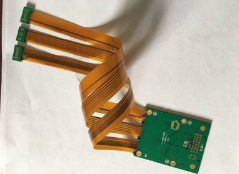
Thermal management is a critical aspect of designing and manufacturing dense rigid-flex assemblies.
These assemblies, which combine rigid and flexible circuit boards in a single package, are becoming increasingly popular in a wide range of industries due to their compact size and ability to withstand harsh environments. However, the dense nature of these assemblies can lead to heat buildup, which can negatively impact performance and reliability.
One of the key benefits of implementing thermal management solutions for dense rigid-flex assemblies is the ability to dissipate heat effectively.
Heat buildup can occur due to the close proximity of components, high power densities, and limited airflow within the assembly.
Without proper thermal management, this heat can lead to component failure, reduced lifespan, and overall system performance issues.
By incorporating thermal management solutions such as heat sinks, thermal vias, and thermal pads, designers can effectively dissipate heat away from critical components. Heat sinks are commonly used to transfer heat from components to the surrounding air, while thermal vias provide a path for heat to travel through the layers of the rigid-flex assembly.
Thermal pads can also be used to improve heat transfer between components and the assembly substrate.
Another benefit of thermal management solutions for dense rigid-flex assemblies is improved reliability.
Excessive heat can cause components to degrade over time, leading to premature failure and costly repairs.
By implementing effective thermal management strategies, designers can ensure that components operate within their specified temperature ranges, prolonging their lifespan and reducing the risk of failure.
In addition to improving reliability, thermal management solutions can also enhance the performance of dense rigid-flex assemblies.
Heat buildup can lead to thermal throttling, where components reduce their performance to prevent overheating.
By effectively dissipating heat, designers can ensure that components operate at their full potential, maximizing system performance and efficiency.
Furthermore, thermal management solutions can also help to reduce the overall size and weight of dense rigid-flex assemblies.
Traditional cooling methods such as fans and heat sinks can add bulk to the assembly, limiting its compactness and portability.
By utilizing more efficient thermal management solutions, designers can reduce the need for bulky cooling components, allowing for smaller and lighter assemblies.
Overall, thermal management solutions play a crucial role in ensuring the reliability, performance, and compactness of dense rigid-flex assemblies.
By dissipating heat effectively, designers can prevent overheating, improve reliability, enhance performance, and reduce the overall size and weight of the assembly.
As the demand for compact and reliable electronics continues to grow, implementing effective thermal management solutions will be essential for meeting the needs of a wide range of industries.