
The Role of Rigid-Flex PCBs in Enhancing AIoT Security
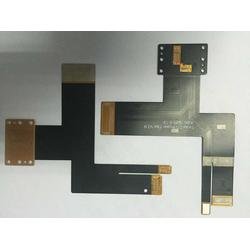
The Role of Rigid-Flex PCBs in Enhancing AIoT Security
As the Artificial Intelligence of Things (AIoT) continues to expand, ensuring the security of connected devices has become a top priority. Rigid-flex printed circuit boards (PCBs) are playing a critical role in enhancing AIoT security by providing a robust and reliable platform for integrating advanced security features. These hybrid circuits, which combine the durability of rigid boards with the flexibility of flexible circuits, enable the development of secure AIoT devices that protect sensitive data and ensure the integrity of connected systems.
1. Enabling Secure Hardware Design
Rigid-flex PCBs provide the foundation for secure hardware design in AIoT devices. By integrating security-focused components, such as secure elements, cryptographic processors, and tamper-resistant modules, rigid-flex PCBs enable the creation of devices that are resistant to physical and cyber attacks.
Applications:
- Secure Elements: These are embedded within the PCB to store cryptographic keys and perform secure authentication, ensuring that only authorized devices can access the network.
- Tamper-Resistant Designs: Rigid-flex PCBs can be designed with tamper-detection features, such as mesh layers that trigger an alert if the device is physically compromised.
2. Supporting Encrypted Communication
AIoT devices rely on secure communication to transmit data between devices and cloud platforms. Rigid-flex PCBs enable the integration of communication modules that support advanced encryption protocols, such as TLS (Transport Layer Security) and AES (Advanced Encryption Standard).
Applications:
- Wireless Communication Modules: Rigid-flex PCBs integrate Wi-Fi, Bluetooth, and 5G modules with built-in encryption capabilities, ensuring secure data transmission.
- Signal Integrity: The design of rigid-flex PCBs minimizes signal loss and electromagnetic interference (EMI), which can be exploited by attackers to intercept data.
3. Facilitating Edge Computing for Security
Edge computing is a key component of AIoT security, enabling real-time data processing and decision-making at the edge of the network. Rigid-flex PCBs support the integration of edge computing capabilities, allowing devices to process sensitive data locally without transmitting it over potentially insecure networks.
Applications:
- Local Data Processing: Rigid-flex PCBs integrate processors and memory modules that enable devices to analyze data locally, reducing the risk of data breaches.
- AI-Driven Security: AI algorithms running on edge devices can detect and respond to security threats in real time, such as identifying unauthorized access or anomalous behavior.
4. Enhancing Physical Security
Rigid-flex PCBs are designed to withstand harsh environments, making them ideal for AIoT devices deployed in critical infrastructure, such as smart grids and industrial systems. Their durability ensures that these devices remain operational and secure even in challenging conditions.
Applications:
- Industrial AIoT: Rigid-flex PCBs used in industrial settings are designed to resist physical tampering and environmental stressors, such as temperature fluctuations and vibrations.
- Wearable Devices: In healthcare and military applications, rigid-flex PCBs ensure that wearable devices remain secure and functional during intense physical activity.
5. Enabling Secure Firmware Updates
Firmware updates are essential for maintaining the security of AIoT devices, but they can also be a vulnerability if not implemented securely. Rigid-flex PCBs support the integration of secure boot and over-the-air (OTA) update mechanisms, ensuring that firmware updates are authenticated and encrypted.
Applications:
- Secure Boot: Rigid-flex PCBs integrate secure boot mechanisms that verify the authenticity of firmware before allowing it to run, preventing unauthorized code execution.
- OTA Updates: Secure communication modules on rigid-flex PCBs enable encrypted OTA updates, ensuring that devices can be patched without exposing them to cyber threats.
6. Supporting Multi-Layered Security Architectures
Rigid-flex PCBs enable the implementation of multi-layered security architectures, combining hardware, software, and network security measures to protect AIoT devices from a wide range of threats.
Applications:
- Hardware-Based Security: Rigid-flex PCBs integrate hardware security modules (HSMs) that provide a secure environment for cryptographic operations.
- Network Security: By supporting advanced communication protocols, rigid-flex PCBs ensure that data transmitted between devices and networks is protected from interception and tampering.
7. Driving Innovation in AIoT Security
As AIoT security threats evolve, rigid-flex PCBs are driving innovation by enabling the development of new security features and technologies. For example, the integration of AI-driven anomaly detection and blockchain-based authentication is becoming increasingly feasible with the advanced capabilities of rigid-flex PCBs.
Applications:
- AI-Driven Anomaly Detection: Rigid-flex PCBs support the integration of AI processors that can analyze data patterns and detect potential security threats in real time.
- Blockchain Integration: By enabling secure communication and data storage, rigid-flex PCBs facilitate the use of blockchain technology for decentralized authentication and data integrity.
Conclusion
Rigid-flex PCBs are playing a pivotal role in enhancing AIoT security by enabling secure hardware design, supporting encrypted communication, facilitating edge computing, enhancing physical security, enabling secure firmware updates, and supporting multi-layered security architectures. As AIoT continues to grow, the demand for secure and reliable devices will only increase, driving further innovation in rigid-flex PCB technology. By addressing the unique security challenges of AIoT, rigid-flex PCBs are helping to create a safer and more connected world.