
The Role of Rigid-Flex PCBs in Enabling Next-Generation AIoT Devices
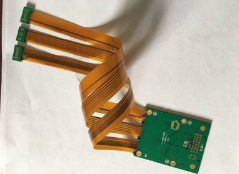
The rapid growth of the Artificial Intelligence of Things (AIoT) has created a demand for advanced hardware solutions that can support the integration of artificial intelligence (AI) and the Internet of Things (IoT). Rigid-flex printed circuit boards (PCBs) have emerged as a critical enabler of next-generation AIoT devices, offering a unique combination of durability, compactness, and high performance. These hybrid circuits, which combine the structural stability of rigid boards with the flexibility of flexible circuits, are revolutionizing the design and functionality of smart devices across industries.
Compact and Lightweight Design
One of the most significant advantages of rigid-flex PCBs is their ability to reduce the size and weight of AIoT devices. In applications such as wearable technology, smart home devices, and autonomous systems, space is often at a premium. Rigid-flex PCBs allow designers to create compact, three-dimensional layouts that maximize space efficiency. For example, in a smartwatch, rigid-flex PCBs enable the integration of sensors, processors, and communication modules into a sleek, ergonomic design. This miniaturization not only enhances the user experience but also enables the development of more portable and versatile devices.
Enhanced Durability and Reliability
AIoT devices are often deployed in challenging environments, where they are exposed to mechanical stress, temperature fluctuations, and moisture. Rigid-flex PCBs are designed to withstand these conditions, making them ideal for applications such as industrial automation, healthcare, and automotive systems. The flexible portions of the PCB can bend and twist without breaking, while the rigid sections provide structural support for critical components. This durability ensures long-term reliability, reducing the need for maintenance and replacement. For instance, in industrial AIoT sensors, rigid-flex PCBs can endure vibrations and shocks, ensuring uninterrupted operation in harsh factory environments.
Seamless Integration of AI and IoT Components
AIoT devices rely on the seamless integration of AI algorithms and IoT connectivity. Rigid-flex PCBs facilitate this integration by providing a reliable platform for mounting high-performance components such as microprocessors, memory modules, and wireless communication chips. The ability to route signals efficiently across both rigid and flexible sections minimizes signal loss and electromagnetic interference, ensuring optimal performance. In smart home devices like security cameras, rigid-flex PCBs enable real-time data processing and transmission, allowing users to monitor their homes remotely with minimal latency.
Enabling Advanced Functionality
The versatility of rigid-flex PCBs enables the development of AIoT devices with advanced functionality. For example, in autonomous vehicles, rigid-flex PCBs are used to integrate LiDAR sensors, radar systems, and control units, enabling real-time decision-making and navigation. Similarly, in healthcare, rigid-flex PCBs are used in wearable devices that monitor vital signs and transmit data to healthcare providers. These applications highlight the role of rigid-flex PCBs in enabling devices that are not only connected but also intelligent and adaptive.
Driving Innovation in AIoT
As AIoT continues to evolve, the demand for rigid-flex PCBs is expected to grow. Manufacturers are investing in advanced materials and manufacturing techniques, such as laser drilling and additive manufacturing, to meet the increasing complexity of AIoT devices. Additionally, the development of eco-friendly rigid-flex PCBs aligns with the growing emphasis on sustainability in technology. By enabling smaller, smarter, and more reliable devices, rigid-flex PCBs are driving innovation in the AIoT landscape and paving the way for a more connected and intelligent future.
In conclusion, rigid-flex PCBs are playing a pivotal role in enabling next-generation AIoT devices. Their unique combination of flexibility, durability, and performance makes them indispensable for applications ranging from consumer electronics to industrial automation. As the AIoT ecosystem continues to expand, rigid-flex PCBs will remain at the forefront of technological innovation, empowering smarter and more efficient devices that transform the way we live and work.