
Benefits of Using Rigid-Flex Circuit Boards in Patient Monitoring Systems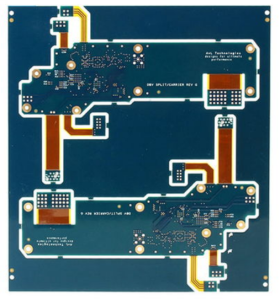
In the field of healthcare, patient monitoring systems play a crucial role in ensuring the well-being of patients.
These systems are used to track vital signs, such as heart rate, blood pressure, and oxygen levels, in real-time.
The data collected by these systems is essential for healthcare providers to make informed decisions about patient care.
One key component of patient monitoring systems is the circuit board, which is responsible for processing and transmitting the data collected by the sensors.
Traditionally, rigid circuit boards have been used in patient monitoring systems. These boards are made of a solid substrate material, such as fiberglass, and are inflexible.
While rigid circuit boards have been effective in the past, they do have limitations when it comes to certain applications.
For example, in patient monitoring systems that require flexibility or compactness, rigid circuit boards may not be the best option.
This is where rigid-flex circuit boards come into play. Rigid-flex circuit boards combine the best of both worlds by incorporating rigid and flexible sections into a single board.
The rigid sections provide stability and support for components, while the flexible sections allow the board to bend and conform to the shape of the device.
This flexibility makes rigid-flex circuit boards ideal for patient monitoring systems, where space is often limited, and the board needs to fit into a small, curved enclosure.
One of the key benefits of using rigid-flex circuit boards in patient monitoring systems is their ability to reduce the overall size and weight of the device.
Because rigid-flex boards can be bent and folded, they can be designed to fit into tight spaces that would be impossible for a rigid board to accommodate.
This compact design not only makes the device more portable but also more comfortable for the patient to wear or carry.
Another advantage of rigid-flex circuit boards is their reliability and durability.
The flexible sections of the board are designed to withstand repeated bending and flexing without compromising the integrity of the circuitry.
This is especially important in patient monitoring systems, where the device may be subject to constant movement and handling.
By using rigid-flex circuit boards, manufacturers can ensure that their devices will continue to function properly even under harsh conditions.
In addition to their size and durability, rigid-flex circuit boards also offer improved signal integrity and reduced electromagnetic interference.
The flexible sections of the board act as a buffer between the rigid sections, helping to dampen vibrations and reduce noise in the signal.
This results in more accurate and reliable data transmission, which is critical in patient monitoring systems where even small errors can have serious consequences.
Overall, the use of rigid-flex circuit boards in patient monitoring systems offers a number of benefits, including reduced size and weight, improved reliability and durability, and enhanced signal integrity.
By incorporating these advanced circuit boards into their devices, manufacturers can create more efficient and effective patient monitoring systems that provide better care for patients.
As technology continues to evolve, rigid-flex circuit boards will likely play an increasingly important role in the healthcare industry, helping to improve patient outcomes and revolutionize the way we monitor and treat medical conditions.