
The Impact of Miniaturization on Rigid Flex PCB Design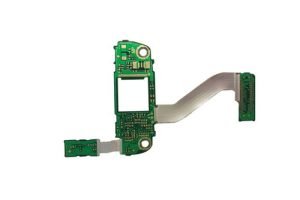
The rapid advancement of technology has led to a growing demand for smaller, more compact electronic devices.
This trend towards miniaturization has had a significant impact on the design of printed circuit boards (PCBs), particularly rigid flex PCBs.
Rigid flex PCBs combine the benefits of both rigid and flexible PCBs, allowing for greater design flexibility and reliability in a smaller form factor.
One of the key challenges posed by miniaturization is the need to pack more components into a smaller space.
This requires careful consideration of the layout and placement of components on the PCB to ensure optimal performance and reliability.
Miniaturization also places greater demands on the materials used in PCB design, as thinner and more flexible materials are often required to accommodate the smaller form factor.
Another important consideration in miniaturization is the impact on signal integrity. As components are packed more closely together, the risk of signal interference and crosstalk increases. This can lead to issues such as signal degradation and data corruption, which can have a significant impact on the performance of the device. To mitigate these risks, designers must carefully plan the layout of the PCB and use shielding techniques to minimize signal interference.
Miniaturization also presents challenges in terms of thermal management. As components are packed more closely together, heat dissipation becomes a critical concern. Inadequate thermal management can lead to overheating, which can cause components to fail prematurely and reduce the overall reliability of the device. To address this issue, designers must carefully consider the placement of components and incorporate thermal vias and heat sinks to ensure proper heat dissipation.
Despite these challenges, miniaturization also offers a number of benefits for rigid flex PCB design. Smaller form factors allow for more compact and lightweight devices, which can be particularly advantageous in applications where space is limited. Miniaturization also enables greater design flexibility, as designers are able to create more complex and innovative PCB layouts that would not be possible with larger form factors.
In conclusion, the impact of miniaturization on rigid flex PCB design is significant. While it presents challenges in terms of component placement, signal integrity, and thermal management, it also offers opportunities for greater design flexibility and innovation. By carefully considering these factors and implementing best practices in PCB design, designers can create reliable and high-performance rigid flex PCBs that meet the demands of today’s miniaturized electronic devices.