
The Benefits of Using Rigid-Flexible Circuit Boards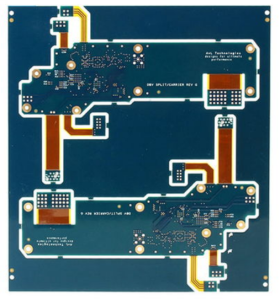
Rigid-flex circuit boards have become increasingly popular in the electronics industry due to their unique design that combines the benefits of both rigid and flexible circuit boards. These boards are made up of a combination of rigid and flexible materials, allowing for greater design flexibility and reliability in a variety of applications.
One of the key benefits of using rigid-flex circuit boards is their ability to reduce the overall size and weight of electronic devices.
By combining the rigid and flexible components into a single board, manufacturers can create more compact and lightweight products without sacrificing performance. This is particularly important in industries such as aerospace, medical devices, and consumer electronics, where space and weight constraints are critical considerations.
In addition to their compact size, rigid-flex circuit boards also offer improved reliability compared to traditional rigid or flexible boards.
The combination of rigid and flexible materials creates a more robust board that is less prone to mechanical stress and thermal expansion.
This results in a longer lifespan for the electronic device and reduces the likelihood of component failure.
Another benefit of using rigid-flex circuit boards is their ability to simplify the assembly process. By integrating multiple components onto a single board, manufacturers can reduce the number of interconnects and solder joints, which can lead to fewer points of failure and improved overall reliability.
This streamlined assembly process also helps to reduce manufacturing costs and improve time-to-market for new products.
Furthermore, rigid-flex circuit boards offer greater design flexibility compared to traditional rigid or flexible boards. Manufacturers can create complex, three-dimensional designs that would be difficult or impossible to achieve with separate rigid and flexible boards. This allows for more innovative and compact product designs that can meet the demands of today’s fast-paced electronics market.
Overall, the benefits of using rigid-flex circuit boards are clear. These boards offer a combination of compact size, improved reliability, simplified assembly, and greater design flexibility that make them an attractive option for a wide range of electronic applications. As technology continues to evolve, we can expect to see even more advancements in rigid-flex circuit board technology that will further enhance the performance and capabilities of electronic devices.
In conclusion, the evolution of rigid-flex circuit board technology has revolutionized the electronics industry by offering a versatile and reliable solution for a wide range of applications. The benefits of using rigid-flex circuit boards, including compact size, improved reliability, simplified assembly, and greater design flexibility, make them an ideal choice for manufacturers looking to create innovative and high-performance electronic devices.
As technology continues to advance, we can expect to see even more exciting developments in rigid-flex circuit board technology that will further push the boundaries of what is possible in the world of electronics.