
Benefits of Using Rigid Flex PCBs in Electronic Devices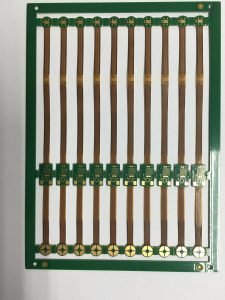
Printed circuit boards (PCBs) are an essential component in electronic devices, serving as the foundation for connecting various electronic components. Traditionally, PCBs have been made using rigid materials such as fiberglass or epoxy resin. However, in recent years, there has been a growing trend towards using rigid flex PCBs, which offer a number of advantages over traditional circuit boards.
One of the key advantages of rigid flex PCBs is their flexibility. Unlike traditional rigid PCBs, which are limited to a fixed shape, rigid flex PCBs can be bent and folded to fit into tight spaces or irregularly shaped enclosures. This flexibility allows for more compact and lightweight electronic devices, making them ideal for applications where space is at a premium.
In addition to their flexibility, rigid flex PCBs also offer improved reliability. The flexible portions of the PCB are less prone to mechanical stress and vibration, reducing the risk of component failure due to fatigue or cracking. This increased reliability can lead to longer product lifespans and lower maintenance costs, making rigid flex PCBs a cost-effective choice for many electronic devices.
Another advantage of rigid flex PCBs is their enhanced signal integrity. The flexible portions of the PCB can be used to route high-speed signals, reducing signal loss and electromagnetic interference. This can result in improved performance and reliability for electronic devices, particularly those that require high-speed data transmission or precise timing.
Furthermore, rigid flex PCBs offer greater design flexibility compared to traditional circuit boards. Designers can take advantage of the flexibility of the PCB to create complex, three-dimensional shapes that would be difficult or impossible to achieve with a rigid PCB. This opens up new possibilities for innovative and creative product designs, allowing manufacturers to differentiate their products in a competitive market.
Additionally, rigid flex PCBs can help to simplify the assembly process for electronic devices. By combining the rigid and flexible portions of the PCB into a single integrated unit, manufacturers can reduce the number of interconnects and solder joints, leading to faster and more efficient assembly. This can result in cost savings and improved manufacturing yields, making rigid flex PCBs a practical choice for high-volume production.
Overall, the advantages of rigid flex PCBs over traditional circuit boards make them an attractive option for a wide range of electronic devices. From improved flexibility and reliability to enhanced signal integrity and design flexibility, rigid flex PCBs offer a number of benefits that can help manufacturers create better-performing, more reliable, and more cost-effective products. As the demand for smaller, lighter, and more powerful electronic devices continues to grow, rigid flex PCBs are likely to play an increasingly important role in the electronics industry.