
Advancements in Stretchable Photonics for Wearable Biosensing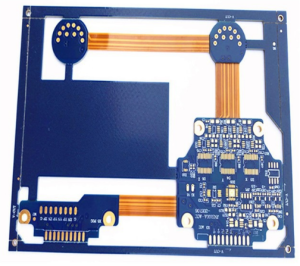
Stretchable photonics is a rapidly evolving field that holds great promise for the development of wearable biosensing devices.
These devices have the potential to revolutionize healthcare by providing real-time monitoring of vital signs and other health indicators.
One of the key challenges in developing wearable biosensors is the integration of rigid and flexible components to create a device that is both comfortable to wear and capable of accurately measuring physiological signals.
Recent advancements in stretchable photonics have made significant progress in addressing this challenge.
Researchers have developed new materials and fabrication techniques that allow for the seamless integration of rigid and flexible components in wearable biosensors. These stretchable photonics devices are capable of conforming to the contours of the body, allowing for continuous monitoring of vital signs without causing discomfort to the wearer.
One of the key innovations in stretchable photonics is the development of stretchable waveguides.
These waveguides are capable of transmitting light signals over long distances while maintaining their flexibility and stretchability.
This allows for the integration of optical sensors into wearable biosensors, enabling the measurement of a wide range of physiological signals, such as heart rate, blood oxygen levels, and glucose levels.
Another important advancement in stretchable photonics is the development of stretchable photodetectors.
These photodetectors are capable of converting light signals into electrical signals, allowing for the accurate measurement of optical signals in wearable biosensors.
By integrating stretchable photodetectors with stretchable waveguides, researchers have been able to create wearable biosensors that are capable of accurately measuring a wide range of physiological signals in real-time.
In addition to stretchable waveguides and photodetectors, researchers have also made significant progress in developing stretchable light sources.
These light sources are capable of emitting light signals at specific wavelengths, allowing for the precise measurement of optical signals in wearable biosensors.
By integrating stretchable light sources with stretchable waveguides and photodetectors, researchers have been able to create wearable biosensors that are capable of accurately measuring a wide range of physiological signals with high sensitivity and specificity.
The integration of rigid and flexible components in wearable biosensors is crucial for ensuring the accuracy and reliability of these devices.
By using stretchable photonics, researchers have been able to overcome the limitations of traditional rigid electronics and create wearable biosensors that are capable of accurately measuring physiological signals in real-time. These stretchable photonics devices have the potential to revolutionize healthcare by providing continuous monitoring of vital signs and other health indicators, leading to early detection of health problems and more personalized treatment plans for patients.
In conclusion, stretchable photonics is a rapidly evolving field that holds great promise for the development of wearable biosensing devices.
Recent advancements in stretchable waveguides, photodetectors, and light sources have enabled researchers to create wearable biosensors that are capable of accurately measuring a wide range of physiological signals in real-time.
By integrating rigid and flexible components using stretchable photonics, researchers have been able to overcome the limitations of traditional rigid electronics and create wearable biosensors that are comfortable to wear and capable of providing valuable insights into the wearer’s health. With further research and development, stretchable photonics has the potential to revolutionize healthcare and improve the quality of life for millions of people around the world.