
Overcoming Design Challenges in Rigid-Flex PCBs for AIoT
Overcoming Design Challenges in Rigid-Flex PCBs for AIoT
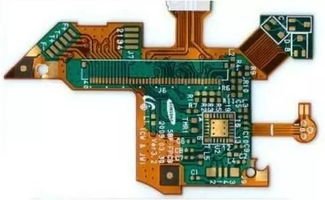
The integration of rigid-flex printed circuit boards (PCBs) into Artificial Intelligence of Things (AIoT) devices has opened up new possibilities for innovation. However, designing rigid-flex PCBs for AIoT applications comes with unique challenges, such as thermal management, signal integrity, mechanical stress, and space constraints. Addressing these challenges is critical to ensuring the reliability, performance, and longevity of AIoT devices. Here’s how engineers and designers are overcoming these hurdles to create cutting-edge rigid-flex PCBs for AIoT.
1. Thermal Management
AIoT devices often incorporate high-performance components, such as processors and sensors, which generate significant heat. In rigid-flex PCBs, managing this heat is particularly challenging due to the compact design and the presence of both rigid and flexible sections. Poor thermal management can lead to component failure or reduced performance.
Solutions:
- Thermal Vias and Heat Sinks: Engineers use thermal vias to dissipate heat from critical components to other layers of the PCB. Heat sinks are also integrated into the design to provide additional cooling.
- Advanced Materials: High-temperature laminates, such as polyimide, are used to improve heat resistance. These materials can withstand elevated temperatures without degrading.
- Simulation Tools: Thermal simulation software helps designers predict heat distribution and identify hotspots during the design phase, allowing for proactive adjustments.
2. Signal Integrity
AIoT devices rely on high-speed data transmission for real-time processing and communication. Signal integrity issues, such as noise, crosstalk, and signal loss, can degrade performance, especially in the flexible sections of rigid-flex PCBs.
Solutions:
- Careful Routing: Signal traces are routed to minimize length and avoid sharp bends, which can cause impedance mismatches and signal reflections.
- Impedance Matching: Designers ensure that the impedance of traces matches the components and connectors to reduce signal loss and reflections.
- Shielding: Ground planes and shielding layers are added to protect sensitive signals from electromagnetic interference (EMI).
3. Mechanical Stress
Rigid-flex PCBs are often subjected to repeated bending, twisting, and vibration, particularly in wearable and portable AIoT devices. Mechanical stress can lead to cracks, broken traces, or delamination of the PCB layers.
Solutions:
- Flexible Materials: High-quality flexible materials, such as polyimide, are used to ensure the PCB can withstand repeated bending without damage.
- Stress Relief Design: Engineers incorporate stress relief features, such as curved traces and staggered vias, to distribute mechanical stress more evenly.
- Robust Testing: Rigorous mechanical testing, including bend and twist tests, is conducted to validate the durability of the PCB design.
4. Space Constraints
AIoT devices are often compact, requiring rigid-flex PCBs to fit into small, irregularly shaped spaces. Designing circuits that maximize functionality while minimizing size is a significant challenge.
Solutions:
- 3D Design Tools: Advanced design software allows engineers to create three-dimensional layouts that optimize space utilization.
- Embedded Components: Passive components, such as resistors and capacitors, are embedded within the PCB layers to save space.
- High-Density Interconnects (HDI): HDI technology enables the placement of more components in a smaller area by using microvias and fine-pitch traces.
5. Manufacturing Complexity
The hybrid nature of rigid-flex PCBs makes their manufacturing process more complex than traditional rigid or flexible PCBs. Ensuring consistency and quality across both rigid and flexible sections is critical.
Solutions:
- Advanced Manufacturing Techniques: Laser drilling and additive manufacturing are used to achieve high precision and reduce defects.
- Automated Inspection: Automated optical inspection (AOI) and X-ray inspection are employed to detect and address manufacturing defects early in the process.
- Collaboration with Manufacturers: Close collaboration between designers and manufacturers ensures that design specifications are met and potential issues are addressed proactively.
6. Environmental Durability
AIoT devices are often deployed in harsh environments, such as industrial settings or outdoor locations, where they may be exposed to moisture, dust, and extreme temperatures.
Solutions:
- Protective Coatings: Conformal coatings are applied to protect the PCB from moisture, dust, and chemical exposure.
- Robust Materials: Materials with high thermal and mechanical stability, such as liquid crystal polymer (LCP), are used to enhance durability.
- Environmental Testing: Rigorous testing, including thermal cycling and humidity tests, ensures that the PCB can withstand harsh conditions.
7. Cost Management
Designing and manufacturing rigid-flex PCBs can be more expensive than traditional PCBs due to the complexity of the process and the use of advanced materials.
Solutions:
- Design Optimization: Engineers focus on optimizing the design to reduce material waste and manufacturing steps.
- Scalable Manufacturing: Investing in scalable manufacturing processes, such as additive manufacturing, helps reduce costs for high-volume production.
- Material Selection: Balancing performance and cost by selecting materials that meet the requirements without being overly expensive.
Conclusion
Designing rigid-flex PCBs for AIoT applications is a complex but rewarding endeavor. By addressing challenges such as thermal management, signal integrity, mechanical stress, space constraints, manufacturing complexity, environmental durability, and cost, engineers are creating innovative solutions that power the next generation of AIoT devices. These advancements are enabling smarter, more efficient, and more reliable systems that are transforming industries and improving lives. As AIoT continues to evolve, overcoming these design challenges will remain a key focus, driving further innovation in rigid-flex PCB technology.