
Overcoming Fabrication Hurdles: The Role of Laser Direct Imaging (LDI) in Complex Rigid-Flex PCB Designs
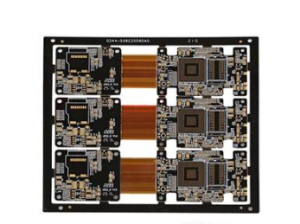
Overcoming fabrication hurdles in complex rigid-flex printed circuit board (PCB) designs can be a daunting task for engineers and manufacturers alike.
The growing demand for smaller, more efficient devices has necessitated innovations in PCB technology, particularly in the realm of rigid-flex designs.
As a revolutionary technique, Laser Direct Imaging (LDI) is playing an increasingly significant role in addressing the challenges associated with these advanced circuit boards.
Understanding Rigid-Flex PCB Designs
Rigid-flex PCBs combine the best of both rigid and flexible circuit boards, allowing them to be used in a variety of applications.
These boards consist of a combination of rigid sections and flexible segments, providing versatility in design while maintaining integrity.
The complexities involved in the design and production of rigid-flex PCBs often present fabrication hurdles, such as alignment issues, layer registration, and intricate trace patterns.
Advancements in manufacturing processes are essential for overcoming these challenges. This is where Laser Direct Imaging (LDI) technology comes into play.
The Advantages of Laser Direct Imaging Technology
LDI technology has revolutionized the way PCBs are fabricated.
Here are some key advantages that make it an essential tool in overcoming fabrication hurdles for complex rigid-flex designs:
Precision and Accuracy
One of the primary challenges in fabricating rigid-flex PCBs is ensuring the precision of the designs, especially when dealing with intricate patterns and small spaces.
LDI utilizes a laser beam to directly image the phototool onto the PCB substrate, eliminating the need for traditional exposure processes.
This results in exceptionally high accuracy, as the laser can focus on tiny details that would be challenging to achieve using conventional methods.
Reduced Costs and Time
Traditional methods of PCB fabrication can be time-consuming and expensive, particularly when duplicating photomasks for various layers.
LDI eliminates the need for photomask production, significantly reducing both the development time and overall costs associated with rigid-flex boards.
This streamlined process allows for quicker turnaround times, enabling manufacturers to meet stringent deadlines without sacrificing quality.
Enhanced Design Flexibility
With LDI, engineers have far greater design flexibility.
It permits the use of innovative features such as fine line widths and narrow spaces, which are often necessary in complex rigid-flex designs.
Moreover, LDI enables rapid design iterations, allowing teams to test and refine their concepts more quickly.
Overcoming Layer Registration Challenges
Layer registration is a crucial aspect of rigid-flex PCB fabrication.
Accurate alignment of the layers ensures that electrical connections are maintained and overall functionality is achieved.
Using LDI technology, fabricators can maintain tighter tolerances during the imaging process, reducing the risk of alignment errors that can lead to malfunctions.
By using LDI, manufacturers can enhance the overall reliability of rigid-flex designs, resulting in products that perform consistently under varying conditions.
Quality Control and Inspection
Another advantage of LDI technology is its ability to incorporate real-time quality control measures during the imaging process.
Traditional manufacturing methods often rely on post-production inspections to verify the quality of PCBs. However, with LDI, inconsistencies can be detected and rectified on-the-fly.
This proactive approach to quality control ensures that every unit produced meets stringent specifications and performance standards.
Sustainable Fabrication Processes
In today’s world, sustainability is a growing concern, particularly in the electronics industry.
LDI contributes to more environmentally friendly manufacturing practices by reducing chemical waste associated with traditional photomask production.
Additionally, the precision of LDI minimizes material waste in the manufacturing process, allowing for a more sustainable approach to rigid-flex PCB design fabrication.
Conclusion
Overcoming fabrication hurdles in complex rigid-flex PCB designs is essential for delivering the next generation of electronic devices.
Laser Direct Imaging (LDI) plays a critical role in this process by offering precision, reduced costs, design flexibility, and enhanced quality control.
As the demand for sophisticated electronics continues to rise, the integration of LDI technology into PCB manufacturing will be a game-changer.
By embracing these advanced techniques, manufacturers can not only meet the challenges of complex designs but also contribute to a more sustainable and efficient future in electronics.
The continued evolution of LDI technology promises to pave the way for innovations that were once thought impossible, making it an invaluable asset in the realm of PCB fabrication.