
In the rapidly evolving landscape of smart home technology, the demand for high-performance smart home hubs continues to rise.
One key element that enables the seamless operation of these hubs is the use of multi-layer rigid-flex stacks.
These advanced circuit board designs play a crucial role in enhancing the functionality and reliability of smart home hubs.
In this article, we will explore the benefits and applications of multi-layer rigid-flex stacks in the context of high-performance smart home hubs.
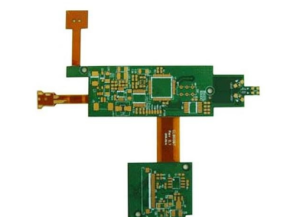
Understanding Multi-Layer Rigid-Flex Stacks
Multi-layer rigid-flex stacks are a unique type of circuit board design that combines rigid and flexible PCB technologies into a single platform.
This innovative approach allows for the integration of multiple layers of circuitry within a single board, enabling increased functionality in a compact form factor.
The rigid sections provide structural support and host components like processors and memory modules, while the flexible sections enable intricate routing and connectivity between different board layers.
Benefits of Multi-Layer Rigid-Flex Stacks for Smart Home Hubs
- Space Efficiency: One of the primary advantages of multi-layer rigid-flex stacks is their space-saving design.
By integrating multiple layers of circuitry in a single board, these stacks enable more compact and streamlined smart home hub designs, making them ideal for space-constrained environments. - Enhanced Reliability: The rigid-flex construction of these stacks offers enhanced durability and reliability compared to traditional PCBs.
The flexible sections reduce the need for bulky connectors and cables, minimizing points of failure and improving overall system reliability. - Improved Signal Integrity: The multi-layer design of rigid-flex stacks allows for better signal integrity and reduced electromagnetic interference.
This is crucial for smart home hubs that require stable and uninterrupted communication between various connected devices. - Higher Performance: The enhanced functionality and connectivity provided by multi-layer rigid-flex stacks contribute to the overall performance of smart home hubs.
These stacks enable faster data processing, efficient power distribution, and seamless integration of diverse sensors and peripherals.
Applications of Multi-Layer Rigid-Flex Stacks in Smart Home Hubs
- Central Control Unit: Smart home hubs serve as the central control unit for interconnected devices within a smart home ecosystem.
Multi-layer rigid-flex stacks play a crucial role in enabling seamless communication between different devices, sensors, and actuators, allowing users to remotely monitor and control their smart home systems. - Data Processing and Storage: The multi-layer design of rigid-flex stacks facilitates the integration of advanced processors, memory modules, and storage components in smart home hubs.
This enables efficient data processing, storage, and analysis, supporting various smart home applications such as security monitoring, energy management, and environmental control. - Wireless Connectivity: Smart home hubs often rely on wireless technologies like Wi-Fi, Bluetooth, and Zigbee to communicate with connected devices.
Multi-layer rigid-flex stacks enable the integration of wireless communication modules and antennas within the hub, ensuring seamless connectivity and robust signal coverage throughout the home.
In conclusion, multi-layer rigid-flex stacks offer a host of benefits for designing high-performance smart home hubs.
By combining the advantages of rigid and flexible PCB technologies, these stacks enable space-efficient, reliable, and high-performance solutions for the rapidly expanding smart home market.
As the demand for smarter and more interconnected homes continues to grow, the utilization of multi-layer rigid-flex stacks will play a crucial role in shaping the future of smart home technology.