
The Evolution of Rigid Flex PCBs in IoT Devices
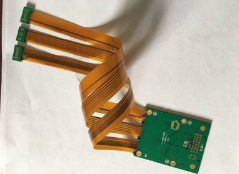
The Internet of Things (IoT) has revolutionized the way we interact with technology, allowing for seamless connectivity between devices and the digital world.
As IoT devices become more prevalent in our daily lives, the demand for innovative design solutions has grown exponentially.
One such solution that is shaping the IoT landscape is the use of rigid flex PCBs.
Rigid flex PCBs combine the benefits of both rigid and flexible circuit boards, offering a unique design solution for devices that require both structural integrity and flexibility.
These boards are made up of multiple layers of rigid and flexible materials that are interconnected to create a single, integrated circuit board.
This design allows for greater flexibility in device design, as well as improved reliability and durability.
The evolution of rigid flex PCBs in IoT devices has been driven by the need for smaller, more compact devices that can withstand the rigors of everyday use.
Traditional rigid PCBs are limited in their flexibility and can be prone to damage from bending or twisting. Flexible PCBs, on the other hand, are more susceptible to damage from bending or twisting.
Rigid flex PCBs offer the best of both worlds, providing the structural integrity of a rigid board with the flexibility of a flexible board.
One of the key advantages of rigid flex PCBs is their ability to reduce the overall size and weight of IoT devices.
By combining multiple layers of rigid and flexible materials into a single board, designers can create more compact and lightweight devices that are easier to integrate into a variety of applications.
This is particularly important in IoT devices, where space is often at a premium and every millimeter counts.
In addition to their compact size, rigid flex PCBs also offer improved reliability and durability compared to traditional PCBs.
The integrated design of rigid flex boards reduces the number of interconnects and solder joints, which can be points of failure in traditional PCBs.
This results in a more robust and reliable device that is better able to withstand the demands of everyday use.
The use of rigid flex PCBs in IoT devices is also driving innovation in device design. The flexibility of these boards allows for more creative and unique designs that would not be possible with traditional PCBs.
This opens up new possibilities for designers to create devices that are more aesthetically pleasing, as well as more functional and user-friendly.
As the demand for smaller, more reliable IoT devices continues to grow, the use of rigid flex PCBs is expected to become increasingly prevalent.
These boards offer a unique design solution that combines the best features of rigid and flexible circuit boards, making them ideal for a wide range of IoT applications.
With their compact size, improved reliability, and innovative design possibilities, rigid flex PCBs are shaping the future of IoT devices and driving the evolution of technology in exciting new directions.