
In the ever-evolving landscape of technology, the demand for compact and lightweight augmented reality (AR) and virtual reality (VR) headsets with enhanced functionality continues to grow.
One of the key components driving these advancements are miniaturized rigid-flex assemblies.
These innovative assemblies provide a flexible yet stable structure for electronic components in a condensed form factor, making them ideal for compact AR/VR headsets.
This article delves into the significance of miniaturized rigid-flex assemblies in the development of next-generation AR/VR devices, showcasing their benefits and applications in creating immersive experiences for users.
What are Miniaturized Rigid-Flex Assemblies?
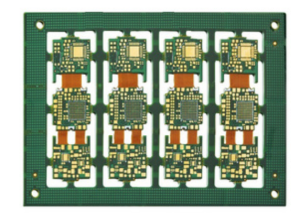
Miniaturized rigid-flex assemblies combine the advantages of both rigid and flexible circuit technologies in a single component.
Rigid sections provide stability and support for components, while flexible sections offer the ability to bend and conform to different shapes, enabling compact and intricate designs.
This unique combination of rigidity and flexibility makes rigid-flex assemblies an excellent choice for applications where space is limited, such as in AR/VR headsets.
Advantages of Miniaturized Rigid-Flex Assemblies in AR/VR Headsets
Enhanced Compactness and Design Flexibility
The compact nature of miniaturized rigid-flex assemblies allows designers to create slimmer and more lightweight AR/VR headsets.
By eliminating the need for bulky interconnecting cables and connectors, the assemblies contribute to a sleeker overall design.
This compactness also enhances user comfort during extended wear and reduces the overall weight of the headset, making it more ergonomic.
Improved Reliability and Durability
Miniaturized rigid-flex assemblies are known for their reliability and durability. The rigid sections provide structural integrity, protecting delicate electronic components from mechanical stress and environmental factors.
The flexible sections offer resistance to bending and vibration, ensuring the longevity of the assembly even in dynamic environments.
This reliability is crucial for AR/VR headsets, where consistent performance is essential for an immersive user experience.
Increased Signal Integrity and Performance
Rigid-flex assemblies maintain signal integrity by minimizing signal loss and electromagnetic interference.
This is particularly important in AR/VR headsets, where high-speed data transmission and low latency are critical for delivering a seamless and immersive experience.
The consistent performance of miniaturized rigid-flex assemblies ensures that the electronic components function optimally, enhancing the overall performance of the headset.
Applications of Miniaturized Rigid-Flex Assemblies in AR/VR Headsets
Display and Imaging Systems
Miniaturized rigid-flex assemblies play a vital role in the display and imaging systems of AR/VR headsets.
These assemblies enable the seamless integration of high-resolution displays, cameras, and sensors in a compact form factor.
By providing a stable platform for these components, rigid-flex assemblies help enhance the visual quality and accuracy of AR/VR experiences.
Motion Tracking and Sensing
In AR/VR headsets, accurate motion tracking and sensing are essential for creating immersive and responsive environments.
Miniaturized rigid-flex assemblies support the integration of gyroscopes, accelerometers, and other motion tracking sensors, ensuring precise and real-time tracking of user movements.
This technology allows for natural interactions within virtual environments, enhancing the overall user experience.
Conclusion
Miniaturized rigid-flex assemblies are revolutionizing the design and functionality of AR/VR headsets, providing a robust and flexible solution for compact electronic assemblies.
By offering enhanced compactness, reliability, signal integrity, and performance, these assemblies are reshaping the landscape of immersive technologies.
As the demand for more advanced and user-friendly AR/VR devices continues to rise, miniaturized rigid-flex assemblies are set to play a pivotal role in shaping the future of augmented and virtual reality experiences.