
Advantages of High-Density Neural Recording Rigid-Flex with On-Board Signal Processing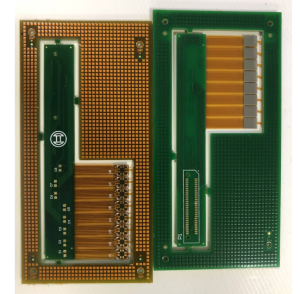
High-density neural recording rigid-flex with on-board signal processing is a cutting-edge technology that offers numerous advantages in the field of neuroscience research and medical applications. This innovative system allows for the simultaneous recording of neural activity from a large number of electrodes, providing researchers with unprecedented insights into the complex workings of the brain.
One of the key advantages of high-density neural recording rigid-flex with on-board signal processing is its ability to capture neural activity with high spatial and temporal resolution. By densely packing electrodes onto a flexible substrate, this system can record from thousands of individual neurons simultaneously, allowing researchers to study the dynamics of neural networks in unprecedented detail. This high-resolution data can provide valuable insights into how the brain processes information and generates behavior, leading to new discoveries in the field of neuroscience.
In addition to its high spatial resolution, high-density neural recording rigid-flex with on-board signal processing also offers excellent temporal resolution.
The on-board signal processing capabilities of this system allow for real-time data analysis, enabling researchers to monitor neural activity as it happens.
This real-time feedback can be invaluable for studying dynamic processes such as learning, memory, and decision-making, as it allows researchers to observe how neural activity changes in response to different stimuli or tasks.
Another advantage of high-density neural recording rigid-flex with on-board signal processing is its flexibility and scalability.
The flexible substrate on which the electrodes are mounted allows for conformal contact with the brain, reducing tissue damage and improving signal quality.
This flexibility also enables researchers to customize the layout of the electrodes to target specific brain regions or networks, making it a versatile tool for studying a wide range of neural processes.
Furthermore, the scalability of this system allows researchers to easily expand the number of electrodes to increase the spatial resolution of their recordings.
By adding more electrodes, researchers can capture neural activity from even larger populations of neurons, providing a more comprehensive picture of brain function. This scalability makes high-density neural recording rigid-flex with on-board signal processing a valuable tool for studying complex neural circuits and networks.
In conclusion, high-density neural recording rigid-flex with on-board signal processing offers numerous advantages for neuroscience research and medical applications. Its high spatial and temporal resolution, flexibility, and scalability make it a powerful tool for studying the brain and understanding how neural activity gives rise to behavior. By providing researchers with unprecedented insights into the workings of the brain, this technology has the potential to revolutionize our understanding of the mind and lead to new treatments for neurological disorders.