
Benefits of Flexible Hybrid Electronics (FHE)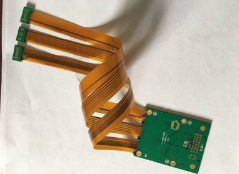
Flexible Hybrid Electronics (FHE) is a cutting-edge technology that is revolutionizing the way electronic devices are designed and manufactured.
Unlike traditional rigid-flex circuits, which are made from rigid materials like fiberglass and copper, FHE circuits are made from flexible materials that can be bent, twisted, and stretched without losing functionality. This flexibility opens up a world of possibilities for designers and engineers, allowing them to create devices that are lighter, thinner, and more durable than ever before.
One of the key benefits of FHE is its ability to conform to irregular shapes and surfaces.
This makes it ideal for applications where traditional rigid-flex circuits would be too bulky or cumbersome.
For example, FHE circuits can be integrated into clothing, medical devices, and even the human body, allowing for seamless integration of electronics into everyday life.
This flexibility also makes FHE circuits more resistant to shock and vibration, making them ideal for use in rugged environments where traditional circuits would be prone to failure.
Another major benefit of FHE is its scalability. Traditional rigid-flex circuits are limited in size and shape by the materials from which they are made, but FHE circuits can be scaled up or down to fit virtually any application. This makes them ideal for use in a wide range of industries, from consumer electronics to aerospace and defense.
In addition, FHE circuits can be manufactured using a variety of printing and assembly techniques, making them more cost-effective and efficient than traditional circuits.
FHE circuits are also more environmentally friendly than traditional circuits.
Because they are made from flexible materials like polymers and organic semiconductors, they require fewer raw materials and produce less waste during manufacturing.
This makes them a more sustainable option for companies looking to reduce their environmental impact. In addition,
FHE circuits can be easily recycled at the end of their life cycle, further reducing their environmental footprint.
In conclusion, Flexible Hybrid Electronics (FHE) offer a wide range of benefits over traditional rigid-flex circuits.
Their flexibility, scalability, and environmental friendliness make them an ideal choice for a variety of applications, from consumer electronics to aerospace and defense.
As the technology continues to evolve, we can expect to see even more innovative uses for FHE circuits in the future.
Whether you’re a designer, engineer, or consumer, FHE is definitely something to keep an eye on as the next big thing in electronics.