
The Benefits of Using Rigid-Flex PCBs in Autonomous Vehicle Systems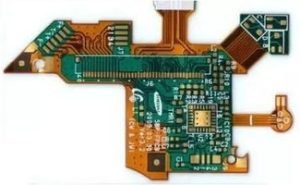
Autonomous vehicles are revolutionizing the way we think about transportation.
These self-driving cars rely on a complex network of sensors, processors, and communication systems to navigate the roads safely and efficiently.
One crucial component that plays a key role in the functionality of autonomous vehicle systems is the printed circuit board (PCB).
In particular, rigid-flex PCBs have become increasingly popular in the automotive industry due to their unique design and numerous benefits.
Rigid-flex PCBs are a hybrid of rigid and flexible PCBs, combining the best of both worlds.
The rigid sections provide stability and support for components, while the flexible sections allow for greater flexibility in design and installation.
This versatility makes rigid-flex PCBs ideal for use in autonomous vehicle systems, where space is limited and reliability is paramount.
One of the main benefits of using rigid-flex PCBs in autonomous vehicle systems is their ability to reduce the overall size and weight of the system.
By eliminating the need for bulky connectors and cables, rigid-flex PCBs can help streamline the design of the vehicle and free up valuable space for other components.
This not only improves the overall performance of the vehicle but also reduces manufacturing costs and simplifies maintenance and repairs.
In addition to their compact size, rigid-flex PCBs also offer improved reliability and durability compared to traditional PCBs.
The flexible sections of the PCB are designed to withstand bending and flexing without compromising the integrity of the circuitry.
This is especially important in autonomous vehicle systems, where the PCB may be subjected to constant vibrations and temperature fluctuations.
By using rigid-flex PCBs, automotive manufacturers can ensure that their systems will continue to function properly under even the most challenging conditions.
Furthermore, rigid-flex PCBs can help improve the overall performance of autonomous vehicle systems.
The unique design of these PCBs allows for more efficient routing of signals and power, reducing signal interference and improving signal integrity.
This can help enhance the accuracy and responsiveness of the vehicle’s sensors and processors, leading to a safer and more reliable driving experience.
Another key benefit of using rigid-flex PCBs in autonomous vehicle systems is their ability to simplify the assembly process.
By integrating multiple PCBs into a single rigid-flex design, manufacturers can reduce the number of components that need to be assembled and soldered, saving time and labor costs.
This can also help improve the overall quality of the system by reducing the risk of human error during assembly.
Overall, the use of rigid-flex PCBs in autonomous vehicle systems offers numerous benefits that can help improve the performance, reliability, and efficiency of these advanced vehicles.
By taking advantage of the unique design and capabilities of rigid-flex PCBs, automotive manufacturers can continue to push the boundaries of technology and bring us one step closer to a future where self-driving cars are the norm.