
High Frequency Performance: Rigid flex PCBs can be optimized for high-frequency applications, making them suitable for modern communication devices
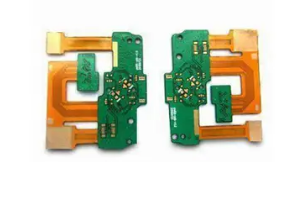
In the era of high-speed communication and data transfer, the demand for electronic devices capable of handling high-frequency signals has skyrocketed. Rigid-flex printed circuit boards (PCBs) have emerged as a key enabler of high-frequency performance, making them indispensable for modern communication devices such as 5G smartphones, Wi-Fi routers, and satellite systems.
Their unique design and material properties allow rigid-flex PCBs to be optimized for high-frequency applications, ensuring reliable signal integrity and superior performance.
One of the primary reasons rigid-flex PCBs excel in high-frequency applications is their ability to minimize signal loss and interference.
High-frequency signals are highly susceptible to attenuation and electromagnetic interference (EMI), which can degrade performance.
Rigid-flex PCBs address this challenge by providing a seamless connection between rigid and flexible sections, reducing the need for connectors and solder joints that can introduce signal degradation. Additionally, the use of advanced materials with low dielectric constants and low loss tangents further enhances signal integrity, ensuring that high-frequency signals travel efficiently across the board.
The design flexibility of rigid-flex PCBs also plays a crucial role in optimizing high-frequency performance.
Engineers can tailor the layout of the PCB to minimize signal path lengths and reduce parasitic capacitance and inductance, which are critical factors in high-frequency circuits. For example, in 5G smartphones, rigid-flex PCBs enable the integration of antennas, RF modules, and processors into a compact and efficient design, ensuring that high-frequency signals are transmitted and received with minimal loss. This is essential for achieving the high data speeds and low latency that 5G technology promises.
Another advantage of rigid-flex PCBs in high-frequency applications is their ability to support impedance control.
Impedance matching is critical for ensuring that signals are transmitted without reflection or loss, particularly in high-frequency circuits.
Rigid-flex PCBs can be designed with precise trace widths and spacing to achieve the desired impedance, ensuring optimal performance in applications such as RF communication, radar systems, and high-speed data transmission.
The robust construction of rigid-flex PCBs also makes them suitable for high-frequency applications in harsh environments.
For instance, in aerospace and defense systems, where communication devices must operate reliably under extreme conditions, rigid-flex PCBs provide the durability and performance needed to maintain signal integrity. Their ability to withstand vibrations, temperature fluctuations, and mechanical stress ensures that high-frequency circuits remain functional even in demanding scenarios.
Furthermore, the integration of rigid and flexible sections in rigid-flex PCBs allows for innovative designs that enhance high-frequency performance.
For example, flexible sections can be used to connect antennas or sensors in optimal positions, while rigid sections provide stability for high-frequency components. This combination of flexibility and stability is particularly valuable in wearable devices and IoT sensors, where space is limited, and performance is critical.
In conclusion, rigid-flex PCBs are a vital technology for enabling high-frequency performance in modern communication devices.
Their ability to minimize signal loss, support impedance control, and withstand harsh environments makes them ideal for applications ranging from 5G smartphones to aerospace systems. As the demand for high-speed communication continues to grow, rigid-flex PCBs will remain at the forefront of innovation, empowering the development of faster, more reliable, and more efficient electronic devices.