
Benefits of Reduced Component Count in Rigid Flex PCBs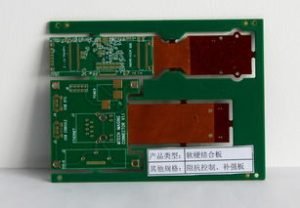
Rigid flex PCBs have become increasingly popular in the electronics industry due to their ability to combine the benefits of both rigid and flexible circuit boards.
One of the key advantages of rigid flex PCBs is their ability to reduce the component count by integrating multiple functions into a single board.
This can lead to a more streamlined and efficient design, as well as cost savings for manufacturers.
By integrating multiple functions into a single board, rigid flex PCBs can significantly reduce the number of individual components needed in a design.
This can lead to a more compact and lightweight product, as well as a simpler and more reliable assembly process.
With fewer components to solder and connect, there is less room for error, resulting in a more robust and reliable final product.
Reducing the component count in a design can also lead to cost savings for manufacturers. With fewer components to source and assemble, production costs can be significantly reduced.
Additionally, a lower component count can lead to a more efficient manufacturing process, as there are fewer parts to handle and assemble.
This can result in faster production times and increased throughput, ultimately leading to cost savings for manufacturers.
In addition to cost savings, reducing the component count in a design can also lead to improved performance and reliability.
With fewer components to solder and connect, there is less risk of connection failures or other issues that can arise from a complex assembly process.
This can result in a more reliable final product that is less prone to failure or malfunction.
Furthermore, by integrating multiple functions into a single board, rigid flex PCBs can also lead to a more compact and lightweight design.
This can be particularly beneficial in applications where space is limited or weight is a concern.
By reducing the overall size and weight of a product, manufacturers can create more compact and portable devices that are easier to transport and use.
Overall, the benefits of reducing the component count in rigid flex PCBs are numerous.
From cost savings and improved performance to compact and lightweight designs, integrating multiple functions into a single board can lead to a more efficient and reliable product.
As the electronics industry continues to evolve, rigid flex PCBs are likely to play an increasingly important role in the development of innovative and cutting-edge products.
By taking advantage of the benefits of reduced component count, manufacturers can create products that are not only more cost-effective and reliable but also more compact and lightweight.