
Material Selection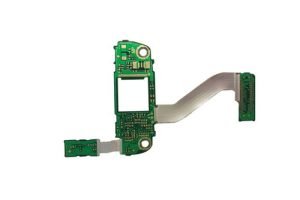
Designing a rigid flex PCB requires careful consideration of various factors to ensure the final product meets the desired specifications and performance requirements. One of the most critical aspects of designing a rigid flex PCB is material selection. The choice of materials can significantly impact the overall performance, reliability, and cost of the PCB. In this article, we will discuss some of the top considerations for selecting materials for a rigid flex PCB.
When selecting materials for a rigid flex PCB, it is essential to consider the mechanical properties of the materials.
The materials used in the rigid portion of the PCB should have good mechanical strength and rigidity to provide support for components and withstand mechanical stresses during assembly and operation. On the other hand, the materials used in the flex portion of the PCB should be flexible and have good bendability to allow for repeated bending without cracking or breaking.
Another important consideration when selecting materials for a rigid flex PCB is thermal properties.
The materials used in the PCB should have good thermal conductivity to dissipate heat generated by components effectively.
Additionally, the materials should have a low coefficient of thermal expansion to minimize the risk of thermal stress and ensure the reliability of the PCB over a wide temperature range.
In addition to mechanical and thermal properties, it is crucial to consider the electrical properties of the materials used in a rigid flex PCB.
The materials should have good electrical conductivity to ensure reliable signal transmission and low signal loss.
Furthermore, the materials should have good dielectric properties to minimize signal interference and crosstalk between different layers of the PCB.
Cost is another important factor to consider when selecting materials for a rigid flex PCB.
The cost of materials can significantly impact the overall cost of the PCB, so it is essential to balance performance requirements with cost considerations.
It is important to consider not only the initial cost of materials but also the long-term cost of maintenance and replacement.
When selecting materials for a rigid flex PCB, it is also essential to consider the manufacturability of the materials.
The materials should be easy to work with and compatible with the manufacturing processes used to fabricate the PCB.
It is important to consider factors such as solderability, adhesion, and compatibility with surface finishes to ensure a successful manufacturing process.
In conclusion, selecting materials for a rigid flex PCB is a critical step in the design process that can significantly impact the performance, reliability, and cost of the final product. When selecting materials, it is essential to consider factors such as mechanical, thermal, and electrical properties, as well as cost and manufacturability. By carefully considering these factors, designers can ensure that the rigid flex PCB meets the desired specifications and performance requirements.