
Benefits of Embracing Flexibility in PCB Design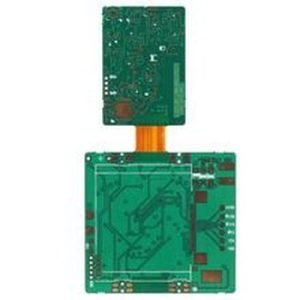
In the world of printed circuit boards (PCBs), flexibility is becoming increasingly important.
As technology continues to advance, the demand for smaller, lighter, and more durable electronic devices is on the rise.
This has led to the development of flexible rigid PCBs, a new generation of PCBs that offer the best of both worlds – the flexibility of a flexible PCB and the rigidity of a traditional rigid PCB.
One of the key benefits of embracing flexibility in PCB design is the ability to create more compact and lightweight electronic devices.
Flexible rigid PCBs allow for greater design flexibility, enabling engineers to create smaller and more complex PCB layouts.
This is particularly important in industries such as aerospace, automotive, and medical devices, where space is often at a premium.
Another advantage of flexible rigid PCBs is their durability.Traditional rigid PCBs are prone to cracking and breaking when subjected to bending or twisting.
Flexible rigid PCBs, on the other hand, are designed to withstand these types of mechanical stresses, making them ideal for applications where the PCB may be subjected to repeated bending or flexing.
In addition to their compact size and durability, flexible rigid PCBs also offer improved signal integrity.
The flexible nature of these PCBs allows for tighter routing of traces, reducing signal loss and improving overall performance.
This is particularly important in high-speed applications, where signal integrity is critical to the proper functioning of the electronic device.
Furthermore, flexible rigid PCBs are also more cost-effective than traditional rigid PCBs.
While the initial cost of flexible rigid PCBs may be slightly higher, the overall cost savings can be significant.
Because flexible rigid PCBs are more durable and reliable, they require less maintenance and replacement over time, resulting in lower overall costs for the end user.
Overall, embracing flexibility in PCB design offers a number of benefits, including compact size, durability, improved signal integrity, and cost savings.
As technology continues to advance, the demand for flexible rigid PCBs is only expected to grow.
By incorporating flexibility into their PCB designs, engineers can create electronic devices that are smaller, lighter, and more reliable than ever before.
In conclusion, flexible rigid PCBs represent the next generation of PCB technology.
By embracing flexibility in PCB design, engineers can create electronic devices that are more compact, durable, and cost-effective.
As the demand for smaller, lighter, and more reliable electronic devices continues to grow, flexible rigid PCBs are poised to become the standard in PCB design. Embracing flexibility is not just a trend – it is the future of PCB technology.