
4D-Printed Shape-Morphing Rigid-Flex PCB: A Game Changer for Minimally Invasive Surgical Robotics
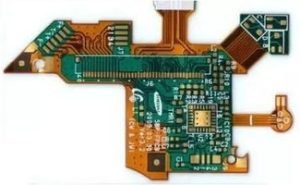
The advent of 4D-printed shape-morphing rigid-flex PCBs has sparked significant advancements in the field of minimally invasive surgical robotics.
As a groundbreaking technology, it addresses some of the critical challenges faced in surgical procedures, including flexibility, precision, and integration.
This article delves deep into how this innovation enhances surgical outcomes and reshapes the landscape of medical robotics.
Understanding 4D Printing and Its Applications
Before delving into the specifics of the 4D-printed shape-morphing rigid-flex PCBs, it’s essential to understand what 4D printing entails.
This technology builds upon the principles of 3D printing, where materials are structured in three dimensions. In 4D printing, a fourth dimension—time—comes into play.
This allows printed objects to change shape or function in response to environmental stimuli such as heat, moisture, or light.
In the context of surgical robotics, this feature proves revolutionary.
The ability of a PCB to adapt its form during a procedure can enable more precise movements and better access to challenging areas within the human body.
Enhancing Flexibility in Surgical Robotics
One of the main challenges in surgical environments is the spatial constraints that narrow openings present.
Traditional rigid components often lack the adaptability required to maneuver through complex anatomical structures. Here is where 4D-printed shape-morphing rigid-flex PCBs shine.
By combining rigid and flexible elements, these circuits not only meet the conventional needs of electrical components but also embrace a transformative capability that allows them to flex and shape themselves as needed.
This technology enables robotic instruments to navigate through less accessible areas without sacrificing precision.
Surgeons can rely on these innovative instruments to perform delicate tasks with minimal invasiveness, leading to shorter recovery times for patients and reduced operational risks.
Material Innovations Behind 4D-Printed PCBs
The materials utilized in fabricating these shape-morphing rigid-flex PCBs play a vital role in their performance.
Advanced polymers and composite materials that respond to various stimuli are crucial for achieving the desired shape manipulations.
These materials are designed not only to conduct electricity effectively but also to maintain structural integrity when deformed.
Moreover, the selection of such materials allows for rapid prototyping and customization tailored to specific surgical needs.
This adaptability is essential as it facilitates the creation of tools specifically designed for unique procedural requirements, thus enhancing overall surgical efficacy.
The Advantages for Minimally Invasive Surgery
The integration of 4D-printed shape-morphing rigid-flex PCBs into minimally invasive surgical robotics offers several benefits:
- Reduced Trauma: Minimally invasive procedures inherently aim to lessen the physical impact on the patient.
By enabling instruments to navigate tight spaces and make precise movements, these PCBs contribute to achieving this goal. - Greater Precision: The morphing capacity allows robotic systems to adapt in real-time, improving the accuracy of surgical interventions.
Surgeons can perform complex procedures with a higher degree of control. - Improved Recovery Times: Reduced invasiveness often leads to faster healing and shorter hospital stays for patients, contributing to better overall healthcare outcomes.
- Cost-Effectiveness: By reducing complications and improving procedural efficiency, hospitals may witness lower operational costs associated with extended patient care.
Future Implications and Research Directions
While the current applications of 4D-printed shape-morphing rigid-flex PCBs in surgical robotics are impressive, they are only scratching the surface of their potential.
Ongoing research is continuously exploring further possibilities, including the incorporation of sensors that communicate real-time feedback to surgeons.
This could dramatically enhance the precision and efficiency of robotic surgery, paving the way for even more sophisticated innovations.
Furthermore, as materials science advances, the durability and scalability of 4D-printed components may improve, making them more accessible for widespread use in hospitals or smaller surgical facilities.
Conclusion
The emergence of 4D-printed shape-morphing rigid-flex PCBs marks a pivotal shift in the realm of minimally invasive surgical robotics.
By combining advanced printing techniques and adaptive materials, they promise to revolutionize how surgeries are performed, significantly impacting patient outcomes.
As research continues to evolve, we are likely to see even more integration of these innovative technologies across various medical applications, ultimately leading to safer and more effective surgical practices.